
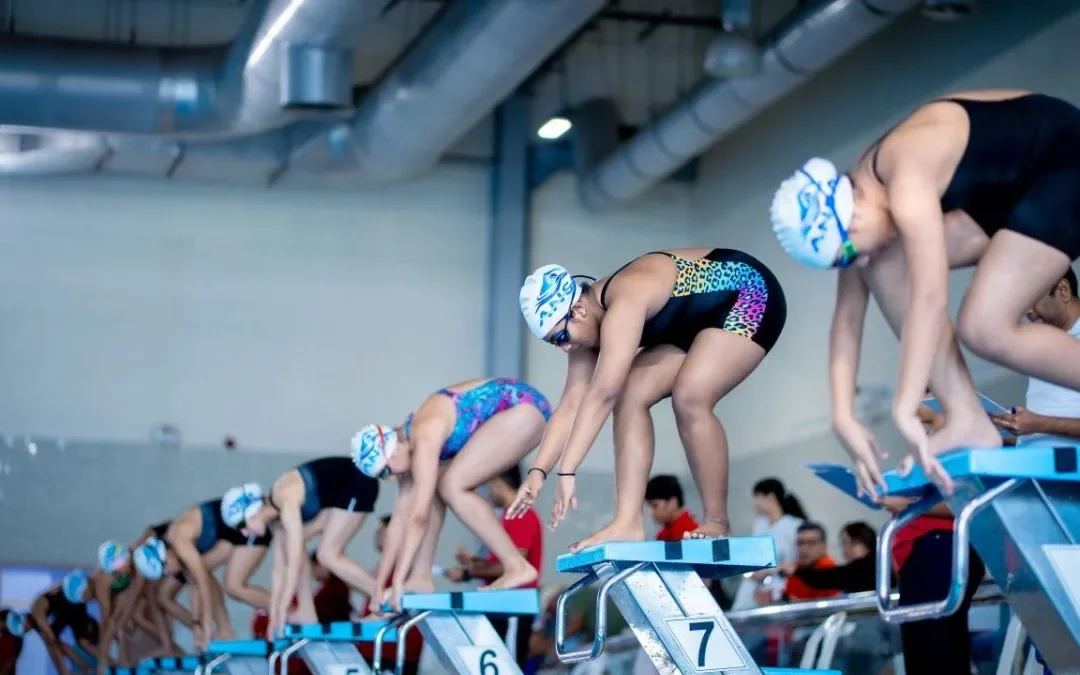
Your child may be ready for competitive swimming if they can swim confidently, demonstrate strong foundational swimming skills, follow coaching instructions, and show a genuine interest in improving their performance. Most importantly, they should enjoy swimming and be motivated to learn and grow as an athlete.
Many children begin their swimming journey by learning basic water safety and swimming skills. As they become more confident in the pool, parents often wonder: Is my child ready for competitive swimming?
Competitive swimming is about more than just racing. It helps children develop discipline, confidence, goal-setting skills, and a strong work ethic while improving their swimming abilities. However, not every child is ready to move into competitive training at the same age. Readiness depends on a combination of swimming skills, physical development, confidence, and personal interest.
What Is Competitive Swimming?
Competitive swimming involves structured training designed to improve technique, endurance, speed, and overall performance. Swimmers participate in regular training sessions and may compete in local, school-level, regional, or national competitions.
Unlike beginner swimming lessons, competitive swimming focuses on:
- Stroke refinement
- Race techniques
- Endurance development
- Speed improvement
- Goal setting and performance tracking
- Competition preparation
The goal is not only to achieve results but also to help children develop valuable life skills that extend beyond the pool.
Signs Your Child Is Ready for Competitive Swimming
Every child develops at a different pace. However, there are several indicators that can help parents determine whether their child is ready to take the next step.
Strong Swimming Fundamentals
Before entering a competitive program, children should have a solid foundation in swimming.
This includes:
- Swimming independently without assistance
- Confidence in deep water
- Good body positioning
- Efficient breathing techniques
- Basic understanding of swimming strokes
Strong fundamentals make advanced training safer and more effective.
Ability to Swim Multiple Strokes
Competitive swimmers are eventually required to learn all four competitive strokes:
- Freestyle
- Backstroke
- Breaststroke
- Butterfly
A child doesn’t need to master every stroke immediately, but they should be comfortable learning and practicing different techniques.
Confidence in the Water
Confidence is one of the most important indicators of readiness. Children who enjoy being in the water, can swim independently, and feel comfortable in different pool environments often adapt more easily to competitive training.
Ability to Follow Coaching Instructions
Competitive swimming requires focus and discipline.
Children should be able to:
- Listen to instructions carefully
- Apply feedback from coaches
- Complete training drills correctly
- Stay focused during practice sessions
The ability to learn from coaching is essential for long-term development.
Interest in Improving Performance
Children who are ready for competitive swimming often show a natural desire to improve.
They may:
- Ask questions about swimming techniques
- Want to swim faster
- Enjoy challenging themselves
- Show excitement about learning new skills
- Take pride in their progress
Motivation and enthusiasm often contribute more to success than natural talent alone.
Physical Stamina and Endurance
Competitive training involves longer practice sessions and increased physical activity. Children should have the stamina to participate actively throughout training sessions while maintaining focus and good technique.
Positive Attitude Toward Practice
Success in competitive swimming requires consistency. Children who enjoy attending lessons, practicing regularly, and working toward goals are often better prepared for the demands of competitive training.
What Age Can Children Start Competitive Swimming?
There is no universal age for competitive swimming. Many children begin exploring competitive pathways between the ages of 6 and 10 years, depending on their swimming ability and level of maturity.
Rather than focusing solely on age, parents should consider whether their child has developed:
- Strong swimming skills
- Water confidence
- Physical readiness
- Emotional maturity
- A genuine interest in competition
A child who is enthusiastic and prepared will usually have a more positive experience than one who feels pressured to compete.
Benefits of Competitive Swimming for Children
Competitive swimming offers many benefits beyond athletic achievement.
Improves Physical Fitness
Swimming develops:
- Strength
- Endurance
- Flexibility
- Coordination
- Cardiovascular fitness
Builds Confidence
As children achieve goals and improve their performance, they gain confidence in their abilities both in and out of the pool.
Teaches Discipline
Regular training teaches children the value of commitment, responsibility, and consistency.
Encourages Goal Setting
Competitive swimmers learn how to set realistic goals, monitor progress, and celebrate achievements.
Develops Resilience
Competition teaches children how to handle both success and setbacks while continuing to work toward improvement.
ANSA’s Pathway to Competitive Swimming
At Aqua Nation Sports Academy (ANSA), swimmers progress through structured programs designed to build confidence, technique, and competitive readiness.
Aqua Bubble
Designed for children aged 4.5–7 years, Aqua Bubble focuses on:
- Water confidence
- Water safety skills
- Floating and body positioning
- Freestyle fundamentals
By the end of the program, swimmers can confidently swim 25 meters freestyle before progressing to Aqua Star.
Aqua Star
Aqua Star helps children improve their swimming techniques while introducing new skills.
The program includes:
- Freestyle refinement
- Backstroke development
- Streamline push-offs
- Underwater glides
- Basic diving skills
By the end of Aqua Star, swimmers can complete:
- 50 meters freestyle
- 50 meters backstroke
Successful swimmers then move to Aqua Tech.
Aqua Tech
The Aqua Tech program focuses on building the strong technical foundation required for competitive swimming.
Swimmers learn:
- Freestyle
- Backstroke
- Breaststroke
- Butterfly
The program also emphasizes:
- Stroke correction
- Dives and turns
- Race finishes
- Competition-standard techniques
- Dryland workouts for core strength and conditioning
To help swimmers gain practical experience, they are encouraged to participate in local and school-level competitions. These experiences help children understand competitive swimming, develop discipline, improve performance, and build confidence.

By the end of Aqua Tech, swimmers are prepared to enter a competitive swimming development program.
Why Parents Choose ANSA
Parents trust ANSA because of its commitment to swimmer development, safety, and professional coaching.
Professionally Qualified Coaches
All ANSA programs are led by highly skilled, certified coaches who are trained in child protection policies and swimmer development. The coaching team focuses on both performance and safety, ensuring that every child receives the support needed to grow confidently in the sport.
What Makes ANSA Different?
- Professionally qualified and certified coaches
- Child-safe learning environment
- Focus on water safety and performance
- Structured progression from beginner to competitive levels
- Temperature-controlled swimming pools
- Fun, engaging, and age-appropriate training programs
Final Thoughts
Competitive swimming can be an exciting and rewarding next step for children who enjoy swimming and want to develop their skills further. While strong swimming fundamentals are important, readiness also depends on confidence, motivation, discipline, and a willingness to learn.
With structured programs such as Aqua Bubble, Aqua Star, and Aqua Tech, along with professionally qualified coaches, children can build the skills, confidence, and competitive mindset needed to succeed both in and out of the pool.
Frequently Asked Questions
What age should a child start competitive swimming?
Many children begin competitive swimming between the ages of 6 and 10, but readiness depends more on skill level, confidence, and interest than age alone.
Does my child need to know all four strokes before joining a competitive program?
No. However, children should have strong swimming fundamentals and be willing to learn and improve all four competitive strokes.
How often should competitive swimmers train?
Training frequency varies based on age and experience. Beginners typically start with a few sessions per week before progressing to more advanced schedules.
Is competitive swimming stressful for children?
When introduced appropriately and supported by qualified coaches, competitive swimming can be an enjoyable and rewarding experience that promotes healthy development.
What is the most important sign that a child is ready for competitive swimming?
A combination of confidence, swimming ability, coachability, physical readiness, and enthusiasm for learning.